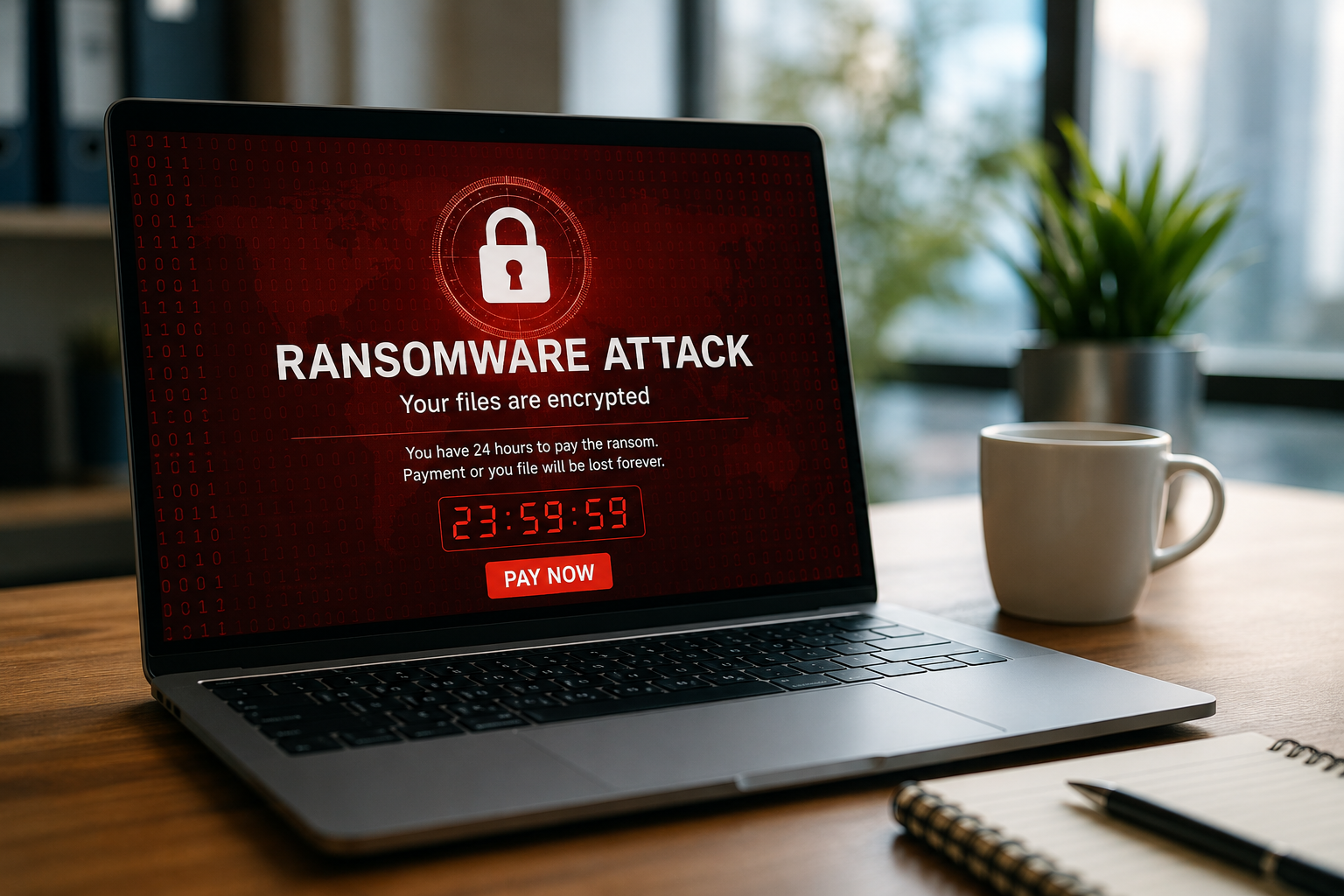
Is Your Business Prepared for a Ransomware Attack?
Every day, businesses across the country are targeted by cybercriminals looking for one thing: access to valuable data.
Ransomware has become one of the fastest-growing cybersecurity threats, impacting organizations of every size—from small businesses and local governments to healthcare providers, schools, and large enterprises. A single successful attack can bring operations to a halt, disrupt customer service, and result in significant financial losses.
The question isn't whether ransomware exists—it's whether your organization is prepared if it happens.
What Is Ransomware?
Ransomware is a type of malicious software designed to encrypt files, systems, or entire networks, making them inaccessible to authorized users. Once systems are locked, attackers demand payment in exchange for a decryption key.
In many modern attacks, cybercriminals don't stop there. They also steal sensitive data before encrypting it and threaten to publish or sell that information if the ransom isn't paid. This tactic, often called double extortion, adds even more pressure on victims.
How Do Ransomware Attacks Start?
Many ransomware incidents begin with simple mistakes or overlooked vulnerabilities, including:
Phishing emails that trick employees into opening malicious attachments or links Weak or reused passwords Stolen login credentials Unpatched software vulnerabilities Exposed Remote Desktop Protocol (RDP) services Infected USB devices or compromised websites
It only takes one successful click or one vulnerable system for an attacker to gain a foothold.
The Real Cost of a Ransomware Attack
When people think about ransomware, they often focus on the ransom demand. In reality, the ransom is usually only one part of the total cost.
Organizations may also face:
Business downtime Lost productivity Recovery and forensic investigation costs Legal and regulatory obligations Damage to customer trust and reputation Loss of critical business data Increased cybersecurity insurance costs
Even if a ransom is paid, there is no guarantee that attackers will provide a working decryption key or delete stolen data.
How to Reduce Your Risk
While no organization can eliminate cyber risk entirely, there are proven steps that dramatically reduce the likelihood and impact of a ransomware attack.
1. Enable Multi-Factor Authentication (MFA)
Passwords alone are no longer enough. MFA adds another layer of protection that can prevent attackers from accessing accounts even if credentials are compromised.
2. Keep Systems Updated
Cybercriminals frequently exploit known software vulnerabilities. Applying operating system, application, and firmware updates promptly helps close these security gaps.
3. Train Employees
Employees are often the first line of defense. Regular cybersecurity awareness training helps users recognize phishing emails, suspicious links, and social engineering attempts before they become incidents.
4. Maintain Reliable Backups
Backups are critical—but only if they work.
Organizations should:
Follow the 3-2-1 backup strategy Keep offline or immutable backup copies Test backup restoration regularly Document recovery procedures
A backup that has never been tested may not be there when you need it most.
5. Monitor Your Environment
Continuous monitoring can identify unusual activity before attackers spread throughout the network.
Security monitoring should include:
Endpoint protection Threat detection Log monitoring Vulnerability scanning Account activity monitoring
Early detection can significantly reduce the damage caused by an attack.
6. Develop an Incident Response Plan
When an incident occurs, every minute matters.
A documented incident response plan helps your organization:
Contain the attack quickly Preserve critical evidence Restore operations efficiently Communicate with employees and customers Meet legal and regulatory requirements
Organizations that prepare in advance typically recover faster than those creating a plan during a crisis.
Recovery Starts Before an Attack
One of the biggest misconceptions about ransomware is that recovery begins after systems are encrypted.
In reality, recovery starts long before an attack ever occurs.
Organizations that invest in strong cybersecurity practices, tested backups, employee education, and proactive monitoring are far more likely to minimize downtime and recover successfully if an incident occurs.
Preparation isn't just about protecting technology—it's about protecting your business, your employees, and the customers who rely on you.
How OneGuard IT Can Help
At OneGuard IT, we help organizations strengthen their cybersecurity posture through proactive planning and layered security solutions.
Our services include:
Managed IT Services Endpoint Detection and Response (EDR) Multi-Factor Authentication deployment Microsoft 365 security Managed backups and disaster recovery Vulnerability assessments Security awareness training Network monitoring Incident response planning Ongoing cybersecurity support
Whether you're looking to improve your current defenses or build a comprehensive cybersecurity strategy, our team can help you prepare before an attack happens—not after.
Don't Wait Until It's Too Late
Cyber threats continue to evolve, but preparation remains your strongest defense.
Taking proactive steps today can help reduce risk, minimize downtime, and protect your organization's future.
If you're unsure whether your business is prepared for a ransomware attack, OneGuard IT can help you assess your environment and identify opportunities to strengthen your security.
The best time to prepare for a ransomware attack is before one ever happens.